A quiz is the least forgiving printable to write, because a badly worded question is not a small flaw — it is a question that everyone gets wrong for the same reason, and you find out after marking thirty of them.
1. Write the questions
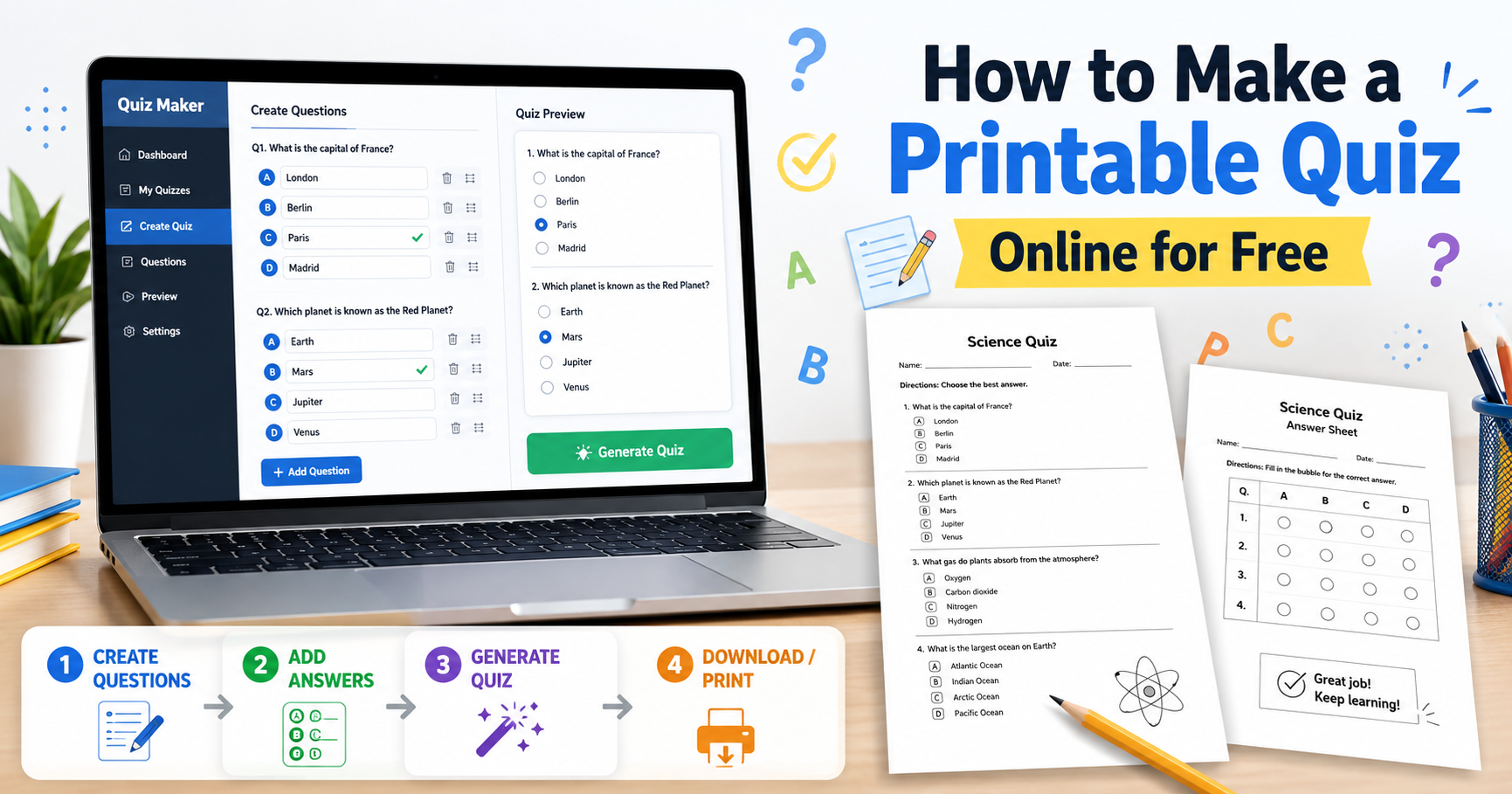
The Questions field takes your items. Write the question first and the answer second — obvious, but the reverse produces questions bent to fit an answer you already liked.
Ten to fifteen questions is a comfortable single sheet. Twenty is a full lesson activity. Past twenty-five, quality drops before the page does.
2. The habits that prevent bad questions
- One idea per question. If it contains 'and', check whether you are really asking two things.
- Avoid negatives. 'Which is NOT a mammal' catches careless readers rather than people who do not know.
- Keep the wrong options plausible. An obviously silly option removes a choice and makes the question easier than you think it is.
- Keep options a similar length. The longest option is right often enough that experienced test-takers pick it on instinct.
- Do not let one question give away another.
That fourth one is the most common tell in homemade quizzes: the correct answer gets the extra clause because the writer was being precise, and the shape of the answer gives it away without the content.
3. Use AI for the first draft, not the last
Generating questions from a topic gets you a full sheet in seconds, and it is genuinely useful as a starting point. Read every one before it goes out.
Two things to check specifically: that the answer is actually right, and that it matches what your class was taught rather than the general truth. A question can be correct and still be off-syllabus, which is worse than wrong because it looks fair.
4. Print
Export the quiz as PDF for the sheet, and keep the answer key separate. Two practical points: leave enough space after each question for handwriting — students write larger than you expect under time pressure — and number the questions so answers can be called out quickly during marking.
A quiz is not always the right tool
For checking vocabulary recall, a crossword does more work than a multiple-choice quiz — the solver has to produce the word rather than recognise it among four. Save the quiz for facts, dates and comprehension, where recognition is genuinely what you are testing.