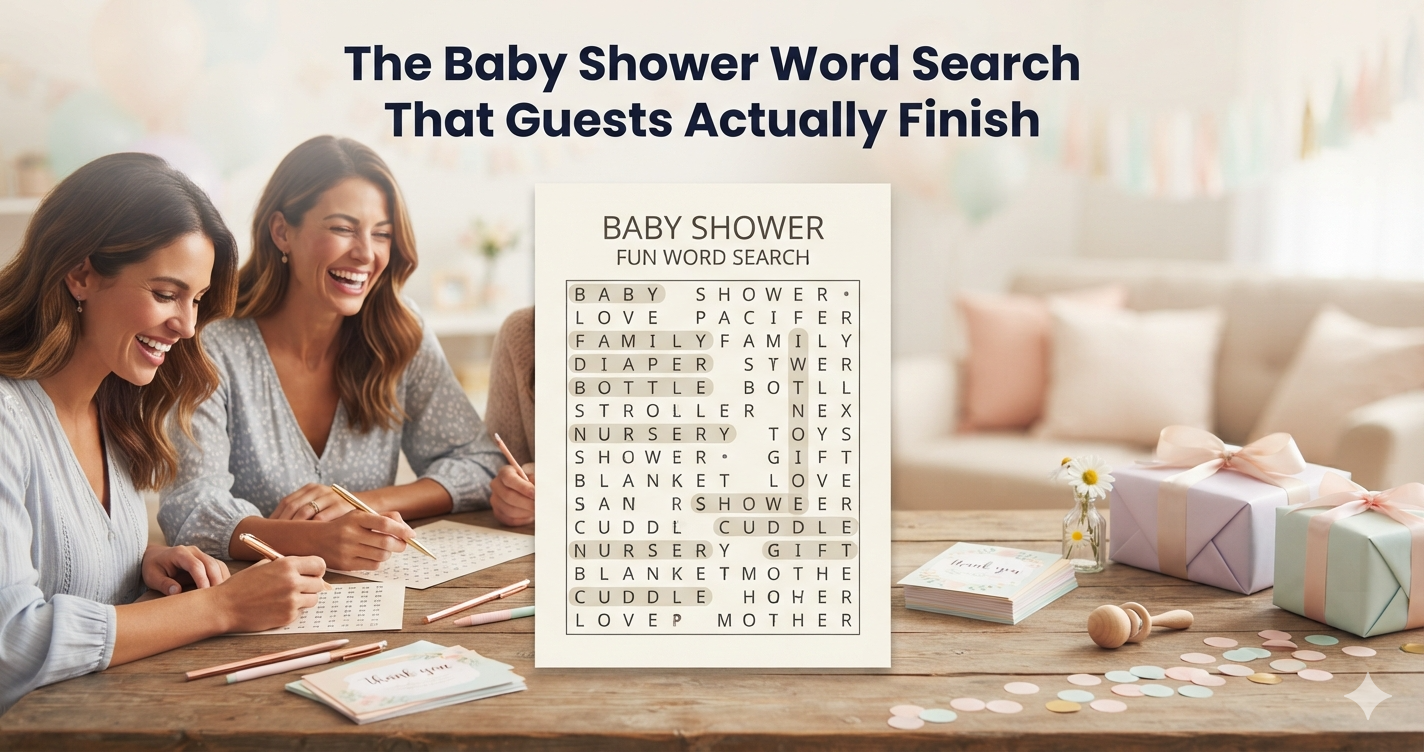
Party word searches have a predictable life. They are handed out, everyone starts, four words get found, conversation resumes, and the sheets end up under the plates. This is not because word searches are boring. It is because the puzzle was built for a solver sitting quietly, and a shower is the opposite of that.
Build for interruption
The single change that matters: assume every guest will be interrupted three times. That means:
- Keep it to 10–12 words. A 15×15 grid with twenty words is a forty-minute puzzle, and nobody has forty uninterrupted minutes at a shower.
- Use a 10×10 or 12×12 grid. Small enough to scan in one glance after looking away.
- Horizontal, vertical and forward diagonals only. Backwards words are a nice challenge alone on a sofa and a source of quiet frustration in a room full of people.
A puzzle that takes eight minutes and gets finished is worth far more than one that takes thirty and does not.
The words are the whole thing
Generic baby vocabulary — BOTTLE, DIAPER, STROLLER — is fine and forgettable. What people remember is when the puzzle is about these particular parents.
Mix roughly half and half:
- Names in the running, if the parents are willing to share them
- The grandparents' names
- The town where the couple met
- The nursery theme or colour
- The pet who is about to be very confused
Keep the words short. Long ones need a clear run of cells and will push you to a bigger grid, which is the thing you were avoiding.
A twelve-word list that feels personal
Starting with a structure is easier than staring at an empty box. Use four words about the parents, four about the day and four familiar baby words. The balance keeps the puzzle recognisable to every guest without turning it into the same list found at every shower.
| Group | Choose four from |
|---|---|
| The parents | First names, hometowns, a pet, a shared hobby |
| The day | Month, venue, colour, nursery theme |
| Baby words | Blanket, bottle, stroller, bedtime |
Read the finished list aloud before generating. If two entries sound almost identical or need explaining, replace one. A party puzzle should start a conversation, not pause while the host explains the vocabulary.
Run one eight-minute test
Generate the exact version you plan to hand out, print one copy at the final size and set an eight-minute timer. Check that every listed word appears in the answer key and that the type remains readable under ordinary room lighting. If you plan to share the playable link, open it once on a phone that is not signed in to your account. That single rehearsal catches a cramped grid, a forgotten answer key and a link copied from the wrong version before guests arrive.
Two practical notes
Print more than you think. People sit down late, and someone always spills something.
And print the answer key — one copy, kept by whoever is running the games. Not for marking; for settling the inevitable argument about whether a word is really in there.
Or skip the printing
If the shower has a group chat, sending a link the guests play on their phones works better than paper for the people who could not travel. They play, they finish, and they are part of it — which is usually the point of inviting them.