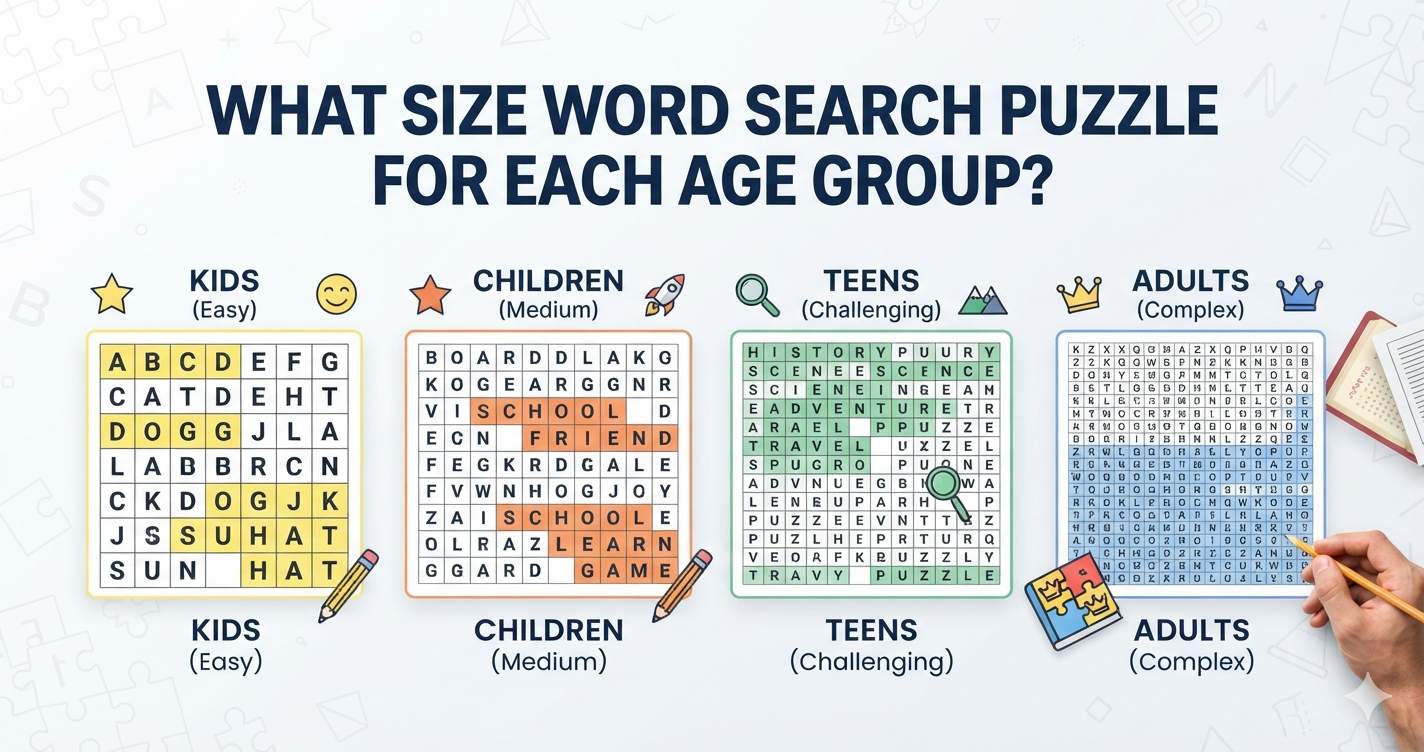
A puzzle handed out as a worksheet produces a quiet room and thirty separate experiences. The same puzzle, handed out differently, produces an activity. The difference costs nothing.
Five formats
1. Pairs, one sheet
One puzzle between two students, one pencil. They have to talk to make progress, and the talking is in the target vocabulary. This is the cheapest change on the list and usually the most effective.
2. Relay
Groups of four, one sheet per group, one person working at a time for ninety seconds before passing it on. It forces the handover to include an explanation of what has already been found.
3. Split lists
Same grid for everyone, but half the class gets one word list and half gets another. They finish, then pair up across the two halves and complete each other's. Nobody can copy, and the second half has a genuine reason to explain rather than show.
4. Build it themselves
The students supply the word list from the week's vocabulary, you generate the puzzle in front of them, and they solve what they wrote. Choosing which words go in is more thinking than solving is, and they know it is theirs.
5. Race the board
Project the puzzle and play as a whole class against a timer. Nobody holds a pencil; hands go up with grid coordinates. Works better than it sounds with a class that has gone flat after lunch.
On playing it on screen
If your class has devices, the same puzzle can be solved on screen and sent as a link. Two things this changes: it marks itself, and a student who finishes early can be given a harder one without you printing anything.
One design note from building it — the touch interaction has to forgive an imprecise drag. Requiring a perfectly straight line across a grid fails on roughly half of honest attempts with a finger, and a child does not conclude that their finger wobbled. They conclude the game is broken. Any tool you use should snap the selection to the nearest legal direction.
The timing question
The most common misjudgement is length. A puzzle that runs past the attention available becomes a management problem rather than an activity.
| Slot | Aim for | Roughly |
|---|---|---|
| Five-minute filler | 5–6 words | 10×10 grid |
| Fifteen-minute activity | 10–12 words | 12×12 grid |
| Half a lesson | 15–20 words | 15×15 grid |
| Cover lesson / early finisher | 20+ words | 20×20 grid |
And always have the answer key to hand. Not for marking — for the student who is certain a word is not in there, and is occasionally right.